Silent Battles
T&V Letter Q3 2026
Crude oil has become significantly more expensive, but diesel prices have risen even more sharply. The main pressure point lies less in the crude oil itself than in the limited capacity to refine it. At the same time, Switzerland has long fostered competition within its own borders. Its 26 cantons compete for companies and wealthy individuals, and choosing the right location can make a substantial difference to the tax burden.


Insight
Why diesel is more expensive than the oil price would suggest
The price of oil has risen significantly. A barrel of Brent crude now costs close to USD 100, around 50 percent more than a year ago. Diesel prices, however, have risen even more sharply. In the US, diesel currently costs an average of around USD 6.38 per gallon, putting it close to its all-time high. The explanation lies in an indicator that receives surprisingly little attention: the "crack spread"
Put simply, the crack spread measures the difference between the cost of crude oil and the value of the refined products produced from it, such as petrol and diesel. It can therefore be viewed as a rough proxy for refinery margins. Under normal conditions, the spread typically ranges between USD 15 and USD 30. By the end of September, however, it had risen to more than USD 60, almost three times its level a year earlier. Refining margins have therefore increased far more sharply than the price of crude oil itself.
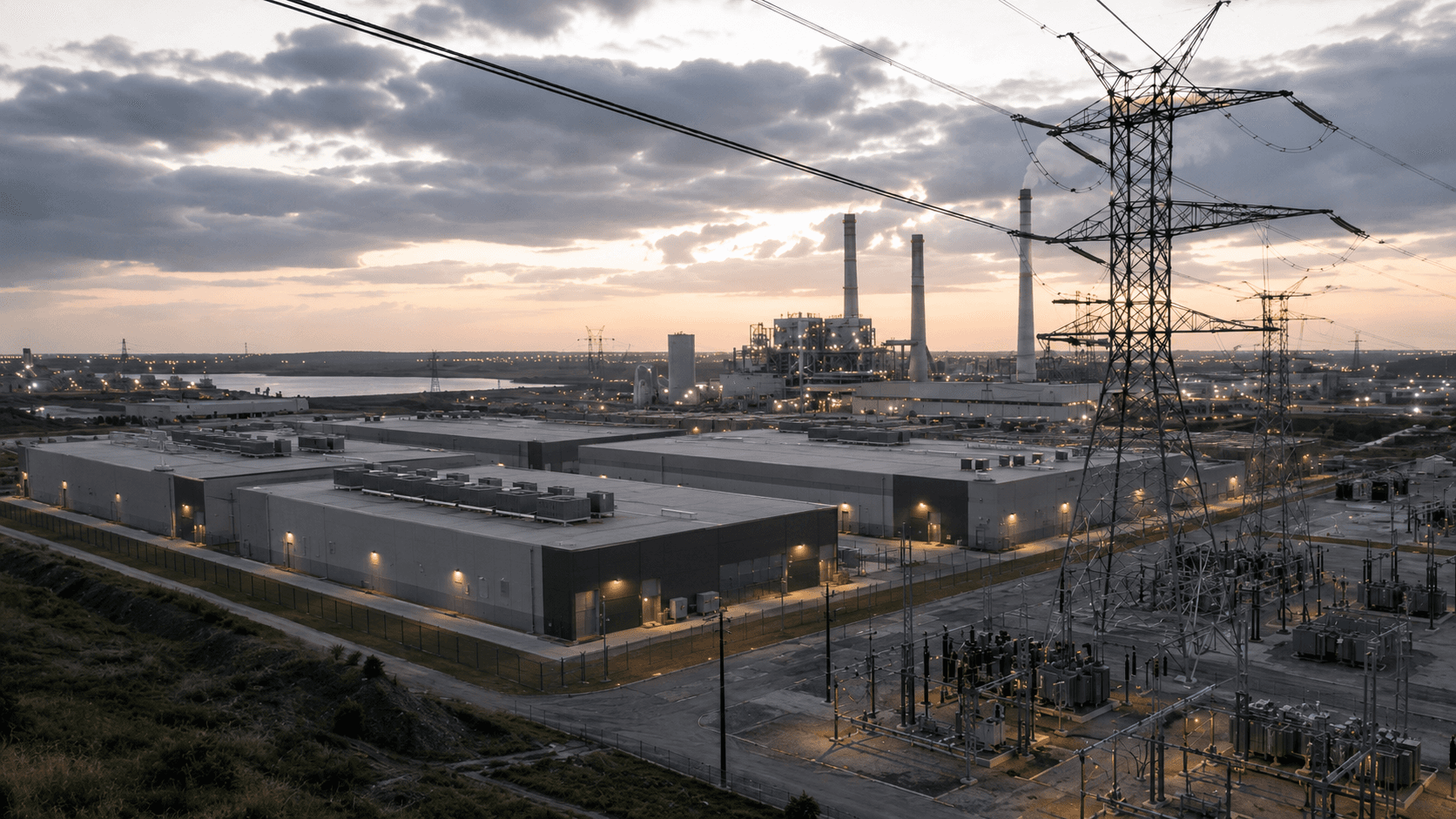
The message is clear: the current shortage is not limited to crude oil. The greater constraint lies in the capacity to turn that oil into products such as diesel and petrol. In recent years, numerous refineries in the West have been closed or converted, while very little new capacity has been added. At the same time, drone attacks on Russian refineries and tighter sanctions have further restricted supply. The Strait of Hormuz, through which roughly one-fifth of global oil supply normally passes, has also been largely inaccessible since July. Significant volumes of refined products, including diesel, would normally pass through the same route.
Expensive fuel is about far more than higher prices at the petrol station. Diesel powers trucks, agricultural machinery, trains and cargo ships, while petrol remains essential for passenger transport. When fuel costs rise, the effects gradually spread through the economy, pushing up the cost of everything from food to construction materials. Europe is particularly vulnerable because of its dependence on diesel imports.
For central banks, this creates an uncomfortable dilemma. Raising interest rates risks weakening the economy further, while doing too little increases the risk that higher energy costs feed into broader inflation. This is what makes the crack spread such a useful indicator. It reveals where the real bottleneck in the energy system lies and can provide an early warning of inflationary pressure before it becomes fully visible in the crude oil price itself.
NEWSLETTER
Dear Reader
In July, we reported on the tentative agreement with Iran that was expected to reopen the Strait of Hormuz. Ultimately, nothing came of it. Yet the markets remain remarkably calm. Inflation, budget deficits and tariffs continue to concern investors surprisingly little, while even interest rate increases in the US and Europe appear to be viewed more as a positive sign that central banks are taking action against inflation.
For Swiss franc investors, perhaps the most important development is this: the franc has weakened slightly for the first time in a long while. This comes as welcome relief for Switzerland’s export industry. Instead of the usual currency headwind, companies are benefiting from a modest tailwind for the first time in years. The picture is less favourable for investors whose base currency is not the Swiss franc and who hold a significant portion of their assets in Switzerland.
As always, this is only a snapshot in time. It remains to be seen how long this period of franc weakness will last. The recent move is also consistent with textbook economics. While the US and Europe have raised interest rates, the Swiss National Bank has left its policy rate at zero. The widening interest rate differential has weighed on the franc.
Beyond the markets, we would also like to turn to a topic that matters just as much to many investors: taxes.
Switzerland’s Silent Tax War
In mid-September, the Financial Times published an article on Switzerland entitled “How Switzerland turned tax competition into a national sport”. Its central argument was simple: while Europe struggles to retain mobile companies and wealthy individuals, Switzerland has been practising tax competition within its own borders for decades. Vontobel’s planned relocation of more than 1,500 jobs from Zurich to Baar from 2030 is simply the latest example in a long-running trend.
This provides a good opportunity to take a closer look at Switzerland’s tax landscape. After all, anyone living, investing or doing business in the country cannot ignore cantonal tax competition. It influences where companies choose to locate, where wealthy individuals decide to live and, indirectly, even shareholder returns.
Corporate taxes: Zug narrowly beaten, Bern at the bottom
The effective corporate tax burden, including federal, cantonal and municipal taxes and measured in the cantonal capital, ranges from 11.66 percent in the cheapest canton to 20.54 percent in the most expensive canton in 2026. The federal component is the same everywhere at 8.5 percent of net profit. The difference arises at cantonal and municipal level.

Important for context: the chart shows the tax rates in the cantonal capitals. Individual municipalities can be significantly cheaper. While the city of Schwyz stands at 13.3 percent, Wollerau and Freienbach come in at around 11.6 percent. Basel-Stadt, Vaud, Neuchâtel and Schaffhausen also operate tiered tax systems. The chart therefore shows the maximum rate, which only applies to profits of between CHF 10 million and CHF 50 million. For most SMEs, the effective tax burden is lower.
For a company with taxable profits of CHF 500,000, the choice of location creates an annual difference of around CHF 44,000 between Lucerne, the cheapest canton at 11.66 percent, and Bern, the most expensive at 20.54 percent. Differences of this magnitude naturally play a role in corporate location decisions.
According to the Financial Times, SGS estimated that, including incentives, the financial benefit of moving from Geneva to Baar would be roughly twice that of relocating within Geneva. Vontobel, which plans to move to Baar from 2030, has stressed that taxes were not the decisive factor, however. Instead, the company pointed to the opportunity to create a shared campus.
Income taxes: The difference is even more dramatic
For individuals, the disparities are even greater. The top income tax rate, including federal, cantonal and municipal taxes and measured in the cantonal capital, ranges from 21.90 percent in Zug to 43.24 percent in Geneva.

For a single person earning a gross salary of CHF 100,000, cantonal and municipal taxes amount to around CHF 4,000 in Zug compared with approximately CHF 15,100 in Geneva, almost four times as much. These figures are based on ESTV data for the 2025 tax year and exclude federal income tax, which is the same everywhere for the same taxable income.
As Zug reduced its tax multiplier from 82 to 78 percent in 2026, the gap is likely to have widened further. Such differences also help explain why neighbouring Schwyz has become a particularly attractive place of residence for wealthy individuals. Once again, the municipality matters. Wollerau, Freienbach and Feusisberg are among the lowest-taxed municipalities in Switzerland.
What competition achieves and where its limits lie
Tax competition is an intentional feature of Swiss federalism. It encourages cantonal administrations to remain efficient, holds politicians accountable and gives both companies and individuals genuine choices.
The flip side is the risk of a “race to the bottom”, which can place structurally weaker cantons under pressure. Geneva and Zurich are responding with tax reforms, but their room for manoeuvre is limited. Zurich city councillor and finance chief Daniel Leupi recently illustrated this point in the NZZ. A reduction in the cantonal corporate profit tax from 7 to 6 percent would cost the city around CHF 150 million in revenue. To compensate for that shortfall, Zurich would need to attract additional companies employing roughly 75,000 people. The city simply does not have the space.
And this is where the strength of the Swiss system becomes clear. As the Financial Times aptly put it: “A company moving from Zurich to Zug is a defeat for Zurich, but not necessarily for Switzerland.” The competition takes place within the same economic area. What one canton loses, the country as a whole retains.
Our conclusion
Swiss federalism is one of the country’s less visible but most powerful competitive advantages. It helps keep the tax burden low by international standards. According to KPMG, Lucerne, Zug and Nidwalden even undercut Ireland on corporate tax rates, while the Swiss average is lower than the rates in Singapore and Hong Kong.
For entrepreneurs and shareholders, this creates a structurally attractive tax environment that is relatively resilient to political change. For large corporations, the OECD minimum tax sets a floor of 15 percent, while SMEs continue to benefit from low ordinary tax rates.
For private individuals, the choice of residence can be a significant and often underestimated factor in financial planning.
What may look like fragmentation is, in fact, one of Europe’s most effective competitive advantages. Whether in the refineries or between the cantons, the decisive battles are often fought where hardly anyone is looking.
*This communication is for informational purposes only and does not constitute a personal recommendation or an independent financial analysis.
*By entering your email address, you agree to receive updates and communications from us. You can unsubscribe at any time.